An accessory is useful when it makes an outfit feel complete without making the day harder. The shoes need to carry you comfortably, the belt should fit, and anything you wear on your wrist or carry in your hand should suit your routine. Begin with those practical questions before thinking about a matching set.
Let the occasion set the level
A workday, a weekend lunch and an evening celebration need different degrees of polish. For a relaxed office, clean leather shoes, a simple belt and a modest watch may be enough. At a formal event, a tie or pocket square can bring in color, but neither is compulsory unless the dress code asks for it.
Look at the clothes first. A patterned shirt or textured jacket may already be the interesting part of the outfit. If the clothing is quiet, one distinctive accessory can have more room. Our smart casual guide shows how the same jacket changes with different shoes and layers.
Choose shoes for the setting and the walking
Loafers can sit comfortably between relaxed and formal dressing, while a lace-up dress shoe often suits a more traditional suit. Clean sneakers can work in a casual setting when the rest of the outfit is deliberate. None of these choices helps if the shoe pinches or the sole is wrong for the day ahead.
Try shoes with the trousers you plan to wear. Check where the hem falls, walk on a hard floor, and consider the weather and distance. A beautifully polished pair that stays in your bag during a long commute may not be the pair you need most.
Coordinate without making everything identical
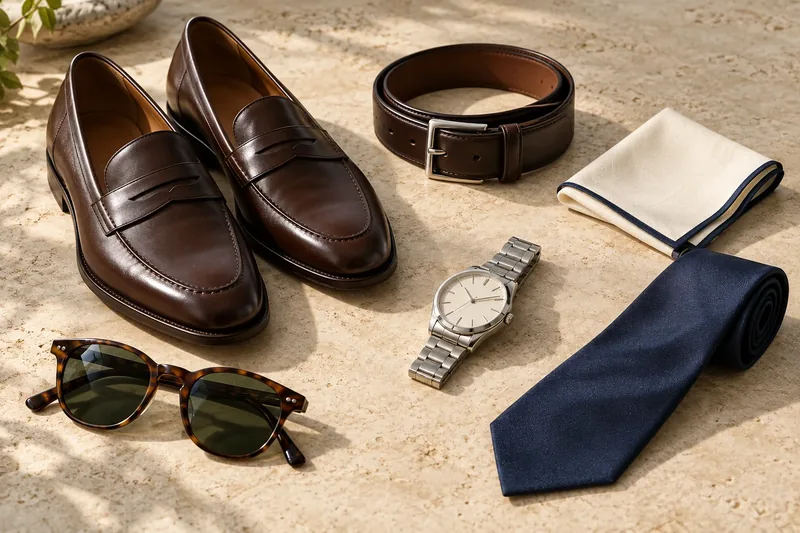
A belt and shoes in related brown tones can look harmonious without being exactly the same shade. Black shoes with a black belt are a straightforward formal combination. For casual outfits, texture and overall balance matter more than a rigid matching rule. Keep the belt width and buckle in proportion to the trousers and the setting.
A watch should be comfortable on the wrist and easy to read if you rely on it. Sunglasses need to fit your face and serve the light you will actually be in. Choose a bag for what it carries: a slim work bag, a practical weekend tote or no bag at all. The goal is a useful outfit, not a checklist of things to wear.
Keep one accent, then step back
If you wear a tie, pocket square and watch together, let one draw the eye. A navy tie with a quiet patterned square can be more flexible than two bold prints competing. Try the full outfit in a mirror at normal distance rather than examining every detail up close. The first impression should be of the person, not the accessories.
For a smaller wardrobe, choose pieces that work with several outfits. A dependable pair of shoes and a belt you wear regularly may deserve more care than a novelty item used once. See our capsule wardrobe guide for a way to test versatility before adding anything new.
Care makes the difference visible
Wipe shoes after wear, follow the care guidance for their material and let them dry properly. Store ties loosely, keep sunglasses in a case and repair a worn belt before it fails at the buckle. These small habits help familiar pieces continue to look considered.
Start with what you already own and notice which detail actually improves your usual outfits. The men's wardrobe guide puts these choices alongside fit, fabric and the clothes themselves; accessories simply finish that larger picture.